
Contents:
Section I — INTRODUCTION & FOUNDATION
Section II — PRE-FLOOD STRUCTURE OF THE EARTH
Section III — CATASTROPHE – THE BROKEN PLANET
Section IV — SCIENTIFIC RAMIFICATIONS OF THE MODEL
Section V — SCIENTIFIC PREDICTIONS & FUTURE RESEARCH
Appendix A: Effects of the BPM Across All Disciplines
Appendix B: BPM Summary and Scientific Impact
Appendix C: Scientific Predictions of the Broken Planet Model (BPM)
SECTION II: PRE-FLOOD STRUCTURE OF THE EARTH
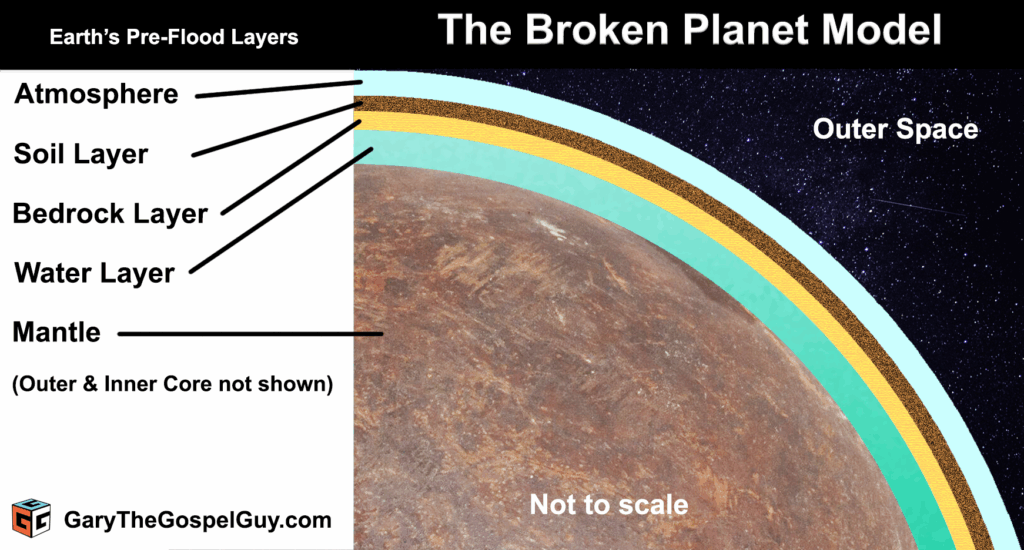
The True Composition of Antediluvian Earth
The Pre-Flood Earth was larger than today’s Earth. It had to be in order to accommodate the thickness of the Water Layer. But how much thicker was it? The answer comes from an unexpected source: The number of days in a year.
In the Hebrew Bible and from other early civilizations we get a calendar that shows 360 days per year. But then those calendars had to be corrected in one way or another.
- Babylonians kept the 360-day model but added 5 “empty” days as a patch.
- Egyptians eventually inserted intercalary days to adjust for solar drift.
- Mayans preserved the 360-day “tun” alongside longer solar cycles.
- Hebrews, through revelation, adopted a lunisolar system to balance both cycles.
- Our Gregorian calendar today also has to deal with the irregular number of days.
What happened that created these various attempts at keeping a true calendar?
The answer lies in realizing that Noah and his sons were the ones who taught everyone the only calendar they knew before the world was changed. But what no one likely knew was that the world itself had actually shrunk. The BPM shows us how the world contained a thick layer of water. When that water was released and the layers above it fell, it was compressed. In essence, it shrank. And since the world was spinning, the spinning rate increased. This is the same effect of physics that is seen when a skater spins faster with arms or a leg held in (retracted) as opposed to held out (extended).
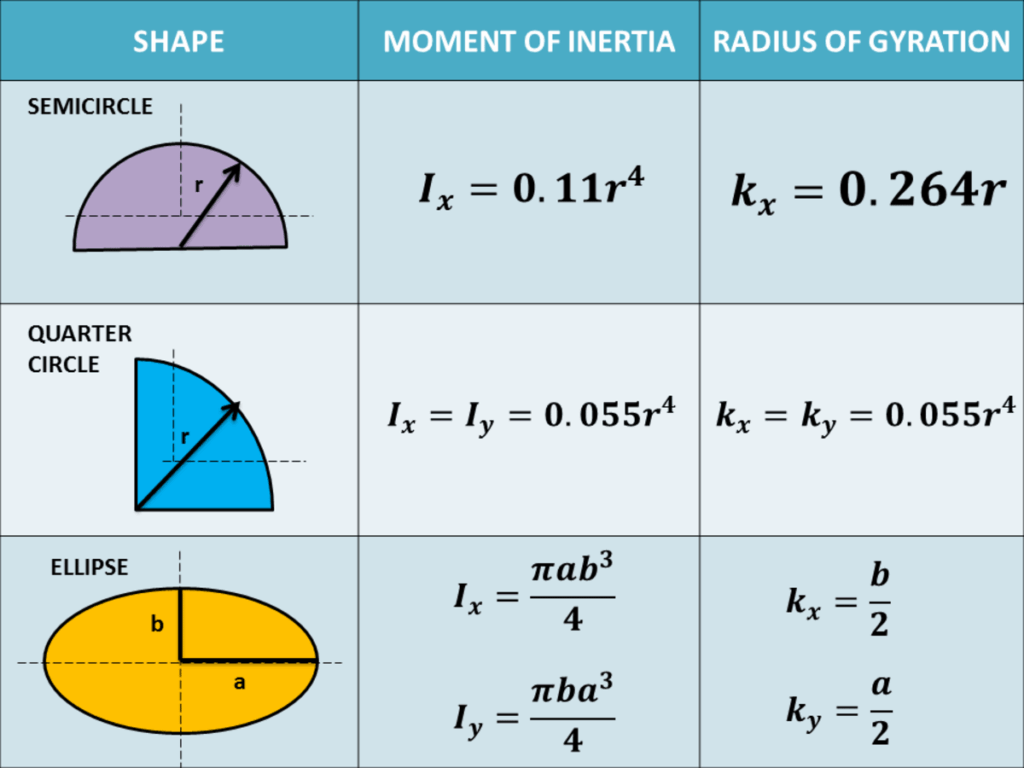
The Law of Conservation of Angular Momentum states that in the absence of external torque, an object’s angular momentum remains constant. Angular momentum L is the product of the moment of inertia I and the angular velocity ω:
L = I • ω
Angular Momentum — L
Moment of Inertia — I
Angular Velocity — ω
OwlCation.com
When the distribution of mass changes—such as pulling in or extending limbs—the moment of inertia changes. To conserve angular momentum, the spin rate adjusts accordingly: if I increases, ω decreases, and if I decreases, ω increases. This principle explains why a figure skater spins faster when pulling their arms in.
With this knowledge, we can then determine the amount of change of the diameter or radius of a sphere when it changes size while spinning.
The Math
For a solid sphere: I = (2/5) x m x r^2
So: L = (2/5) x m x r^2 x ω
If no external torque is acting, then L is constant. So if the Earth’s radius changes from r₁ to r₂, the spin rate (ω) must adjust accordingly: (2/5) x m x r₁^2 x ω₁ = (2/5) x m x r₂^2 x ω₂
Canceling constants and mass m: r₁^2 x ω₁ = r₂^2 x ω₂
Since angular velocity is the number of rotations per unit time, a longer year means a slower spin.
Solving for the new spin rate ω₂: ω₂ = (r₁^2 / r₂^2) x ω₁
Now let’s relate this to the rotation period (i.e., length of the year in days). Angular velocity ω is inversely proportional to the rotation period T: ω = 2π / T
Substituting: r₁^2 / r₂^2 = T₂ / T₁
Applying Earth Values:
Let:
- T₁ = 360 days/year (before the Flood)
- T₂ = 365.25 days/year (after the Flood)
Then: T₂ / T₁ = r₁^2 / r₂^2
365.25 / 360 = r₁^2 / r₂^2 ≈ 1.01458
Take square root of both sides: r₁ / r₂ ≈ √1.01458 ≈ 1.00727
Final Interpretation:
This means the Earth’s radius decreased by approximately 0.727% during the Flood, if angular momentum was conserved and the year lengthened from 360 to 365.25 days.
Given:
- T₁ = 360 days/year (pre-Flood)
- T₂ = 365.25 days/year (now)
- r₂ = 6,371 km (modern radius)
We solve for r₁: r₁ = r₂ x √(T₁ / T₂) or r₁ ≈ 6,371 × √(360 / 365.25)
Our calculation then becomes:
360 / 365.25 ≈ 0.9856
√(0.9856) ≈ 0.99277
r₁ ≈ 6,371 x 0.99277 ≈ 6,323.7 km
Final Result:
That gives us a decrease in Earth’s size from 6,371 km to 6,323.7 km, a reduction of about 47.3 km in radiusduring the Flood. That is a decrease of 0.727% in radius. This tiny shift in radius had global consequences — not just for Earth’s physics, but for every calendar civilization has ever known.
Does this mean that the Water Layer was 47.3 km thick? No. It means that the pre-Flood world diameter was 47.3 km thicker. But that includes the Water Layer, Bedrock Layer, and Soil Layer. Are any of these layers still present? Yes and no. The surface of Earth is no longer an organized set of layers neatly stacked on each other as before. We now have a fractured Bedrock, that exists as Tectonic Plates (fractured segments of the original sphere). Since some of these plates are now overlapping or submerged into the Mantle, that layer is indeterminately varied now (meaning it’s a mess). And since the original Soil Layer has been turned to mud then baked and turned to sedimentary rock, stacked into what are now continents, that variance is difficult to determine as well. And since an unknown amount of water replaced the exuded lava, that number is an unknown quantity. So all we can do is guess.
And since I am not proficient in this kind of processing and do not have hard data for all of the variables, a rough estimate is all I can come up with. Since some of the thickness of the original Bedrock, now Tectonic Plates still is part of the thickness, it is averaged from a logical guess. And since the soil is still present but rearranged into rocky stacks, that too must be averaged and guessed at. The average amount of estimated lava now above the Mantle must be figured into the estimate as well. Not to mention a guess as to how much water replaced the extruded lava. So, with all of that, this is what I came up with for Earth’s original layer thicknesses:
- Water Layer—24 km
- Bedrock Layer—14 km
- Soil Layer—7 km
If the reader has a better estimate based on superior knowledge and training, I am all ears.
Atmosphere
The Pre-Flood World: A Perfect Atmosphere for Life
Imagine stepping outside anywhere on Earth—no matter the location, no matter the time of day or year—and feeling the perfect warmth of the air around you. Not too hot, not too cold—just right. The kind of environment where clothing was unnecessary for survival, a place where every day felt like a perpetual springtime, tailor-made for human comfort.
“Birthday suit weather,” everywhere on Earth, all the time.
This was the Pre-Flood world—an atmosphere unlike anything we experience today in most parts of the world, optimized for human longevity, animal vitality, and plant growth beyond anything we now see. The air was not just breathable—it was enriching, energizing, and life-sustaining.
The atmosphere was thick, rich, and oxygen-enhanced. The air you inhale would have been noticeably different, with oxygen levels estimated at 30-40%, nearly double today’s 21%. Every breath flooded the body with energy, boosting metabolism, endurance, and cellular repair. Unlike today, where high altitudes deprive the body of oxygen, the Pre-Flood world ensured that every altitude felt like sea level—dense, oxygen-rich, and effortlessly breathable. This enhanced oxygenation allowed for faster healing, stronger bones, and greater physical stamina—perhaps even a naturally heightened mental clarity. The very air sustained a world of gigantism, where enormous trees, towering plants, and animals far larger than their post-Flood descendants thrived. Carbon dioxide levels were also significantly higher, estimated between 1000-2000 ppm, making the entire world a greenhouse of unparalleled plant growth.
The pressure of the atmosphere was also greater than what we experience today, possibly 1.3 to 2 times the current 14.7 psi. This higher air pressure would have created a hyperbaric paradise, where oxygen was absorbed more efficiently, boosting the body’s ability to heal and resist disease. It would have made every breath more effective, filling the bloodstream with an abundance of life-giving oxygen. Hyperbaric therapy today is used to accelerate healing and boost immune function, but in the Pre-Flood world, these benefits were not confined to special medical treatments—they were the natural state of life. This pressurized environment contributed to the extraordinary physical abilities of early humans and animals, explaining the strength, vitality, and longevity described in the Bible.
Radiation was likely nonexistent, as the Mantle was still containing its radiation out of harm’s way. Also, Earth was protected by a magnetosphere far stronger than it is today. The Outer Core dynamo was vibrant and powerful, generating a magnetic shield that blocked harmful cosmic rays and solar radiation. Unlike today, where DNA-damaging radiation contributes to aging, disease, and mutation, the Pre-Flood world was a radiation-free environment. This absence of genetic degradation preserved the integrity of the human genome, contributing to lifespans that stretched beyond 900 years.
The Pre-Flood climate was stable and perfectly regulated, free from the violent weather systems we endure today. No hurricanes, tornadoes, or destructive storms tore through the land. No scorching summers or bitter winters disrupted life. Instead, a consistent, high humidity provided an even distribution of moisture, sustaining lush, tropical conditions across the entire planet.
Unlike today’s chaotic and destructive water cycle, which produces erosion through storms, floods, and extreme weather, the Pre-Flood system was gentle, balanced, and non-destructive. If rain existed at all, it was mild—a soft, short-lived rain, more like mist or dew than torrential downpours. The land was not shaped by floods or erosion, but remained intact, free from the geological scarring caused by modern weathering processes. The atmosphere itself likely played a direct role in water retention and distribution, ensuring that every region received the moisture it needed without instability or climatic extremes.
Every part of the world was comfortably habitable—a global Eden, where temperature and moisture worked together in flawless harmony.
Beneath this ideal atmosphere, the soil was pure, rich, and bursting with nutrients. It had never been depleted by erosion, overuse, or synthetic chemicals. The food it produced was incomparably potent, packed with minerals and life-giving energy. Every plant, fruit, and grain was designed to sustain and strengthen, supporting lifespans that stretched across centuries. The water that nourished the land was pristine, uncontaminated by industrial waste or heavy metals, flowing with the perfect mineral balance to sustain both body and mind.
This was a world designed not just to sustain life, but to perfect it. Every breath, every meal, every moment in this world energized, strengthened, and rejuvenated. There was no sickness, no frailty, no fear of the elements. A world where 900 years of life was not a dream—but the standard.
We were never meant to wither and weaken as we do today. The human body, in its original design, was built to endure, thrive, and live in perfect harmony with the world around it. Even though the Creator quickly put a cap on the lifespans of His people (due to their disobedience), that cap was very high compared to that in our radioactive environment now.
This was the world that existed before the catastrophe. A world we can barely comprehend—yet one that left its fingerprints deep within the Earth’s foundations. Now, we turn to the perfect soil that sustained this paradise, the very ground that made such a world possible.
| Key Points: The Pre-Flood Atmosphere: A Perfect Environment for Life Earth’s atmosphere was optimized for human longevity, animal vitality, and plant growth.A globally stable climate provided ideal conditions, with no extreme weather or natural disasters.Temperature was always perfect—neither too hot nor too cold, making clothing unnecessary for survival, only modesty or stylistic expression. Enhanced Oxygen & Air Pressure Oxygen levels were 30-40%, nearly double today’s 21%, enriching every breath.Higher oxygenation boosted metabolism, endurance, healing, and cellular repair.Increased atmospheric pressure (1.3 to 2 times today’s 14.7 psi) created a hyperbaric environment, enhancing oxygen absorption.Pre-Flood humans and animals were stronger, healthier, and longer-lived due to this enriched atmosphere. Radiation-Free & Magnetically Shielded The Mantle contained radiation, preventing exposure to harmful levels.Earth’s magnetic field was far stronger than today, shielding life from cosmic rays and DNA-damaging radiation.This radiation-free environment preserved genetic integrity, contributing to lifespans exceeding 900 years. A Gentle, Balanced Climate No hurricanes, tornadoes, or destructive storms disturbed life.High humidity created lush, tropical conditions worldwide.If rain existed at all, it was light and gentle, not the torrential storms seen today.No erosion or geological scarring from weathering, as the water cycle was stable and non-destructive. The Soil & Water: Perfectly Pure & Nutrient-Rich Pre-Flood soil was rich and uncontaminated, never depleted by erosion or synthetic chemicals.Plants, fruits, and grains were packed with life-giving energy, supporting extreme longevity.Water was pristine, with a perfect mineral balance, free from industrial contaminants. A World Designed for Strength, Longevity, and Thriving No sickness, frailty, or fear of the elements—humanity was meant to thrive.900-year lifespans were normal, not fantasy.The Pre-Flood world left its fingerprints deep within the Earth, providing clues to its perfect design before the catastrophe. |
Soil Layer
The Pre-Flood World: The Perfect Soil Layer
Beneath the perfect atmosphere, the land itself was a masterpiece of design. Unlike today, where landscapes are scarred by erosion, pollution, and nutrient depletion, the Pre-Flood world rested upon a foundation of pristine, mineral-rich soil that nourished both flora and fauna with unparalleled abundance.
This soil layer was not just the surface upon which all life existed—it was the very fabric that sustained the ecosystem in perfect balance. Even in aquatic zones—whether shallow seas, vast lakes, slow-moving rivers, or lush swamps—the soil was foundational, ensuring that every biome flourished with life. Unlike modern oceans, where salinity renders vast expanses uninhabitable for most terrestrial creatures, every body of water in the Pre-Flood world was fresh, pure, and rich with minerals. There was no brackish or salty water—only clean, oxygenated, life-supporting waters that cycled effortlessly through the land.
The land itself was one contiguous, unbroken mass—a vast, interconnected terrain without the modern division of continents. Where today we see vast oceans separating landmasses, the Pre-Flood world was a lush, green planet, covered in rolling hills, sprawling forests, and abundant plant life. Towering trees formed dense canopies, while endless meadows stretched to the horizon, bursting with flowers, fruit-bearing plants, and grain-producing vegetation.
A Layer of Life: The Depth and Composition of Pre-Flood Soil
The depth of the Soil Layer is not known but could have been between 5 to 10 kilometers (3 to 6 miles), guessing, due to the average thickness of today’s continents only covering about 19% of the surface which is smaller than the surface then. That just means that the Soil Layer was likely not very thick. It didn’t have to be, by design. It just had to be thick enough for the tall, tall trees to be firmly rooted in it, to support the seas that were likely no more than a thousand feet thick (305 meters), which is plenty for the larger whales and other giant marine life. Remember, the tall mountain ranges of today did not exist back then; only rolling hills all around the world.
The thickness of the soil layer was far greater than what we see today for the soil, as much of what was once fertile ground has since been transformed into sedimentary rock by the catastrophic processes of the Flood, but far less than the overall depth of the continents. If we could take all the soil and sedimentary rock now scattered across the continents and redistribute it evenly as healthy soil, we would find that the original soil layer covered the surface at a far greater depth than the topsoil dirt of today. The land was not the thin, depleted crust we now struggle to cultivate—it was a deep, thriving biosphere, teeming with nutrients and microbial life that sustained plants and animals at peak health. My estimate for the soil would be somewhere between three and ten kilometers over a slightly larger surface than now. Our continents today are thicker than this, but they are mostly made of rock now (which was once this beautiful soil). Plus, they are fragmented and spread out across the planet with deep oceans in-between.
The richness of the soil was unlike anything imaginable. Modern farmland, despite all efforts at fertilization and supplementation, cannot come close to the natural fertility of the Pre-Flood world. The minerals and nutrients embedded in the ground were in perfect proportion to sustain all life forms without depletion. Each plant drew from an inexhaustible supply of essential elements, due to a robust and balanced system of replenishment, ensuring that food was naturally fortified with all the vitamins, minerals, and organic compounds needed for unparalleled health and longevity.
Beneath this fertile soil, gravel and sand layers likely housed the water table (just atop the Bedrock Layer) allowing for perfect water filtration, enabling the movement of moisture both downward and upward as needed. Water could easily pass through the soil, replenishing underground reservoirs and nourishing plant life without stagnation or depletion. These layers functioned as a natural purification system, ensuring that water remained pristine at all times, constantly cycling between the surface and subterranean layers in a flawless, self-regulating system. I suspect that the water table was fairly consistent globally.
A Landscape of Beauty and Abundance
Every part of this world was lush, green, and vibrant with life. The land was not divided by harsh, jagged mountains or deep ocean trenches but was instead composed of gentle rolling hills, vast plains, and fertile valleys. Forests stretched unbroken for thousands of miles, rivers meandered calmly through rich grasslands, and flowering plants blanketed the landscape in colors too vivid to describe.
There were no barren deserts, no ice-covered tundras, no lifeless wastelands. The entire Earth was a paradise, designed for flourishing life in every corner. Every plant grew with unmatched vigor, its roots sinking into soil enriched by minerals of the highest quality. The topography was smooth, with only gentle elevation changes, allowing water to distribute evenly across the land.
The Water System: A Perfect Cycle
Water was abundant, but it was not a chaotic system of uncontrolled rainfall and violent storms. The entire hydrological cycle was carefully balanced, with fresh water moving between the surface and underground reservoirs in a way that sustained life without destruction or depletion.
Rain as we know it today may not have existed at all. Instead, moisture rose from the land in the form of gentle mists, evenly distributing hydration across the world. Streams and rivers flowed steadily, replenished by underground sources, while potentially massive freshwater seas provided habitats for aquatic creatures—including the mighty plesiosaurs and giant whales, which swam freely in lakes and inland seas no deeper than the modern Great Lakes of the United States.
These vast bodies of water, though sometimes deep enough to sustain great creatures, were nothing like the abyssal depths of today’s oceans. The Pre-Flood world had no Mariana Trench, no crushing oceanic depths where life struggles to survive. Instead, the seas were teeming with vibrant ecosystems, harmoniously integrated into the land-based world.
The purity of the water was unparalleled. There were no pollutants, no toxins, and no salinity to render it undrinkable. Water cycled effortlessly through the soil layers, filtering through sand and gravel before resurfacing in perfectly pure condition through bubbling springs. Every river and lake was a source of pristine hydration, nourishing both humans and animals, along with plants, without contamination.
The Hidden Treasures Beneath the Soil
Within this rich soil were not just nutrients, but untapped natural resources. Gold, silver, and precious stones were readily available, embedded within the Earth in a way that made them easily accessible. Unlike today, where these resources must be mined from deep within the crust, Pre-Flood man could likely gather them from near-surface deposits, their abundance a reflection of the richness of the world itself.
Even elements like tar and bitumen existed in useful, non-hazardous forms. Natural tar pits may have been a valuable resource rather than a deadly trap, offering a ready supply of material for waterproofing and construction. Geysers, heated by the internal energy of the planet, would have provided mineral-rich, therapeutic waters, further adding to the perfection of this ecosystem.
The Perfect Foundation for Life
This was a world without famine, without soil depletion, without barren landscapes. Every part of the land was designed to support life in abundance, supplying all the raw materials needed for both survival and advancement.
Food was richer, cleaner, and more potent than anything modern agriculture could produce. Ph and chemically balanced, both water and land were pure and life-giving. The land itself was a self-replenishing source of health, strength, and vitality.
Everything in the Pre-Flood world worked together to sustain a utopia of longevity and abundance. The people of that time did not struggle with malnutrition, dehydration, or agricultural failures. They lived in a perfectly designed ecosystem, one that had everything necessary for human flourishing.
The soil was not merely dirt beneath the feet—it was a living foundation, one that supported a world where life was designed to last, to thrive, and to endure.
Now we will turn to the structure beneath this layer—the Crust Bedrock Layer, the boundary between the lush surface world and the hidden depths of the Earth.
| Key Points: The Pre-Flood Soil Layer: A Perfect Foundation for Life Pristine, mineral-rich soil sustained all life in perfect balance, free from erosion, pollution, and depletion.The Soil Layer was foundational to both land and aquatic ecosystems, providing nutrients for plants and supporting clean, fresh bodies of water.No barren deserts, ice-covered tundras, or wastelands existed—only fertile, flourishing landscapes. Depth and Composition of Pre-Flood Soil Estimated to be between 3 to 10 km deep, thicker than today’s depleted soil but shallower than modern continents.Rich in nutrients, supporting towering trees, vast plant life, and massive freshwater seas.Sedimentary rock we see today was once fertile Pre-Flood soil, later transformed by the Flood’s catastrophic processes.Beneath the soil, layers of gravel and sand allowed for perfect water filtration, ensuring constant hydration and renewal. A Unified Landmass: No Modern Continents or Deep Oceans The Pre-Flood world was a single, unbroken landmass, covered in rolling hills, forests, and plains.No tall mountain ranges or deep ocean trenches, only smooth, habitable terrain.All bodies of water were fresh and rich in minerals, unlike today’s salty, inhospitable oceans.The world was covered in lush greenery, with interconnected meadows, rivers, and flowering landscapes. The Water System: A Perfect Cycle of Hydration No chaotic rainstorms, hurricanes, or destructive floods.Moisture was evenly distributed, likely through gentle rains and mist.Rivers flowed steadily from underground sources, maintaining balance without erosion.Freshwater lakes and inland seas supported marine life, including large creatures like whales and plesiosaurs.Water was perfectly pure, free from toxins, pollution, and excessive salinity. Hidden Treasures Beneath the Soil Gold, silver, and precious stones were abundant and easily accessible, not buried deep within the crust.Natural tar and bitumen existed in useful forms, serving as waterproofing and construction materials.Geysers and springs provided mineral-rich, therapeutic waters, further enhancing the ecosystem’s perfection. A Land of Abundance & Longevity No soil depletion or agricultural failure—food was naturally rich, potent, and life-sustaining.Every plant was packed with essential minerals and nutrients, far beyond what modern agriculture can produce.Water and soil was naturally pH-balanced and pure, free from industrial contamination.The Pre-Flood world was designed to sustain long lifespans and human flourishing, providing everything necessary for health and strength. The Ultimate Design for Thriving Life The soil was more than just dirt—it was a living, nutrient-rich foundation.The land was designed to last, thrive, and endure, supplying everything for a world of abundance.This was a paradise, free from famine, drought, and destruction, an ecosystem built for longevity and prosperity. |
The Bedrock Layer: Earth’s Original Foundation
Beneath the rich soil of the Pre-Flood world lay the Bedrock Layer, a single, unbroken shell of rock that encased the Earth’s interior. Unlike today’s fragmented Tectonic Plates—which are the shattered remains of this original layer—the Bedrock Layer was completely intact, uniform in composition, and structurally sound, forming an unyielding foundation for the biosphere above.
This layer was not subject to any geological instability—there were no faults, cracks, shifting lands, or seismic disturbances of any kind. The world was a place of absolute stability, where the forces that now shape and break the land had no foothold. It was a perfectly spherical world, without the equatorial bulge seen today. The shape of the Bedrock Layer was determined not by rotation-induced deformation, but by the perfectly spherical Mantle beneath it and the uniform gravitational balance that held all layers in place.
When the Flood occurred, this layer fractured catastrophically—when the Bedrock fell—and gave rise to the modern Tectonic Plates.
Location—Supporting the Soil, Water, and Life Above
The Bedrock Layer lay directly beneath the Soil Layer, forming a thick yet porous boundary that allowed for precise water transfer between the surface and the subterranean Water Layer beneath it. This layer bore the weight of the entire biosphere, all surface water, and the soil itself, ensuring complete stability for the Pre-Flood world. Unlike the unstable landscapes of today, where land shifts and erodes over time, the original Earth was firm, unchanging, and fully secure.
While today’s world has both continental and oceanic plates, these are simply broken pieces of the Bedrock Layer, now fractured and moving. In its original form, this layer was whole, undivided, and structurally perfect.
Thickness—The Unrecognized Foundation of Modern Plates
The Bedrock Layer was likely no more than 10 miles (16 km) thick, the same as today’s tectonic plates, which are simply the broken remains of this former whole. While modern geology differentiates between continental and oceanic crust thickness, this distinction fails to recognize the true origin of these plates.
• Under the oceans, the thickness of the original Bedrock Layer is more easily measured, though obscured by layers of extruded lava and sediment.
• Under the continents, additional rock layers have built up, complicating accurate measurement.
• The variable depths of the asthenosphere contribute to confusion, leading to incorrect estimates of original thickness.
Despite these distortions, the Bedrock Layer was always a continuous, uniform shell before being fractured. It was not merely comparable to modern plates—it was modern plates, before they were divided into plates.
A Single, Unbroken Shell—The Pre-Flood Earth’s Stability
There were no cracks, no faults, and no fractures in the Bedrock Layer before the Flood. It was a whole, singular structure, encasing the subterranean Water Layer without weakness or instability. The Earth’s surface did not shift, drift, or deform—it remained completely stable until the moment of judgment.
Because the Bedrock Layer was fully intact, the Pre-Flood Earth was perfectly spherical, unlike today’s slightly flattened shape. This was due to the uniform structural integrity of the Mantle beneath it, which held everything in precise gravitational balance. The equatorial bulge we see today only developed after the cataclysmic collapse of the Mantle and Bedrock Layer yielding to subsequent rotational instability.
Composition—Uniform Rock Type and Strength
While the exact mineral composition of the Bedrock Layer is unknown, it was entirely uniform across the planet. Unlike today’s varied geological formations, which include diverse rock types and inconsistent layering, the original foundation of the Earth was the same everywhere.
If it was similar to granite, it may have contained quartz, feldspar, and other silicate minerals, but with enoughstructural integrity that enabled it to support the weight of the entire Pre-Flood world due to the help of the contained mass of the Water Layer within it. For if water cannot be displaced, it is firmer than rock, since rock can be crushed while contained water cannot.
This rock was both rigid and porous, designed to facilitate the necessary transfer of water between the subterranean chamber and the soil above. While modern rock formations often display irregular porosity due to fractures and deformation, the Bedrock Layer’s permeability was designed with precision—just enough to allow controlled water transfer, but strong enough to maintain structural stability. It is a marvel that the Water Layer was allowed just enough transference without full displacement.
Water Transfer Through the Bedrock—A Balanced System
Yes, one of the most fascinating features of the Bedrock Layer was its role in facilitating water transfer between the subterranean Water Layer and the water table lying on its surface. Unlike today’s water tables, which primarily exist within sedimentary layers and fractured rock, the Pre-Flood water table was a seamless, planet-wide system, lying just above the Bedrock Layer and interacting with the subterranean waters below. It was as though the Bedrock was not just saturated with Water but filled with it and drowned in it as well. Likely, the Soil Layer immediately upon the Bedrock was sand and gravel.
This interaction created a remarkable equilibrium:
• The Water Layer beneath the Bedrock was fully pressurized, maintaining the structural integrity of the Bedrock itself.
• Water permeated the Bedrock Layer, creating a global water table just beneath the soil, ensuring continual hydration of the land.
• The water table did not function like modern underground aquifers; rather, it served as a filtration boundary between the surface and subterranean waters, maintaining separation while allowing controlled exchange.
• The balance was so precise that despite the Bedrock being water-saturated, it remained structurally sound.
This means that the Bedrock was not merely holding back the Water Layer—it was fully immersed in it. Imagine a container so perfectly “overfilled” that its contents exist both inside and outside of it. The Bedrock was in the Water Layer just as much as the Water Layer was contained by it. This condition, in effect, was instrumental in ensuring the anaerobic seal of the Water Layer below.
The depth of this upper water table is unknown, but it may have fluctuated in response to lunar gravitational influence, just as tides do today. However, this system was entirely stable—there were no tides, no flooding, and no disruptions to the land above.
After the Flood, mud and sediment likely entered the porous structure of the fractured Bedrock, solidifying into rock under extreme heat and pressure. This is a key element in understanding why the tectonic plates may no longer be porous in the same way—they were effectively sealed by post-Flood sedimentation.
Created on the Third Day—The Original Geological Structure
The Bedrock Layer and Mantle were created together on the Third Day, forming the original structural components of the Earth. Unlike every other rock formation—all of which are post-Flood sedimentary, igneous, or amalgamated metamorphic layers—the Bedrock and Mantle are the only true original rock layers on Earth.
Thus, the Bedrock Layer is nearly 6,000 years old, while all sedimentary and volcanic rock formations are no older than 4,300 years. This is one of the clearest divergences from secular geology, which assigns deep-time assumptions to formations that were, in fact, the direct result of a singular catastrophic event.
For 1,656 years, the Earth remained a world of perfect stability.
• No earthquakes
• No shifting landmasses
• No mountainous formations
• No volcanic activity
But when the moment came—when the Bedrock fell—everything changed in an instant. Beneath it lay a vast, pressurized deep fountain, ready to explode. And when it did, the world as it was—ceased to be.
| Key Points: Earth’s Bedrock Layer was: • A single, unbroken shell of rock that encased the Earth’s interior before the Flood. • The original foundation of stability—completely uniform in composition, with no faults, fractures, or seismic activity. • A containment chamber for the Water Layer inside of it, allowing for precise water transfer without full displacement. • Structurally supported by the Water Layer—water could not be compressed or displaced, making it a stronger foundation than rock alone. • Intact and stable—no earthquakes, fissures, mountain-building, or volcanic activity existed before the Flood. • Located between the Soil Layer and the Water Layer. • Both a barrier and filtration system for subterranean water. • The surface’s radiant heater. • Filled and covered with water. • Likely porous and/or having vents to facilitate water exchange while maintaining the anaerobic seal of the Water Layer. • Shattered catastrophically into the tectonic plates during the Flood, when the Water Layer beneath it was explosively released. • Uniform in thickness worldwide—no more than 10 miles (16 km) thick, the same as the modern broken tectonic plates. • Partly the reason for Earth’s perfect spherical shape before the Flood, along with the perfect Mantle. • Created on the Third Day, along with the Mantle, forming Earth’s only original rock layers—unlike all post-Flood sedimentary, igneous, and metamorphic formations. • Stable for 1,656 years—until the moment of judgment when it fractured, triggering the global catastrophe of the Flood. |
Water Layer: The Fully Contained Reservoir Beneath the Earth
Beneath the Bedrock, nestled in the space between Earth’s solid foundation and the fiery depths of the Mantle, the Water Layer was filled with fresh water, not salty, and contained no life forms due to the complete lack of light, the force of its motion, and its anaerobic nature. This fully contained subterranean reservoir was a crucial component of the Pre-Flood Earth’s design, playing a fundamental role in stabilizing the planet’s structure, regulating thermal energy, and supporting the surface environment.
Location & Thickness
The Water Layer resided within what is now called the Mohorovičić Discontinuity (Moho), the boundary between the Bedrock’s Tectonic Plates and the Mantle. Unlike today, where the Moho is merely a transition zone, in the Pre-Flood world this region was filled with this vast, continuous body of fresh, contained water, encasing the Mantle.
Its thickness ranged from 15-18 miles (uncertain), or 24-29 km, forming a global, fully contained reservoir. This Water Layer permeated the Bedrock Layer, joining with the water table above, with the Bedrock acting as both a separator and a conduit for controlled transfer between the two layers. Rather than being a high-pressure geyser waiting to erupt, this system maintained a delicate balance, calibrated to uphold structural integrity without unnecessary strain. We could say that the Bedrock holding it was overflowing with fresh water that passed both ways through it.
Temperature: A Thermally Stable System
The Water Layer was anaerobic, meaning it existed in a completely sealed environment apart from the atmosphere. Because it was insulated from the atmosphere, its temperature remained significantly higher than modern surface waters (many hundreds of degrees, Fahrenheit). The Mantle, functioning as Earth’s nuclear-powered internal heater, radiated thermal energy into the Water Layer, keeping it not just warm, but consistently heated without allowing it to boil. This Water Layer, being fully anaerobic, resisted phase change (from liquid to gas) due to the absence of oxygen and other gases that allow vaporization.
Function: Stability & Heat Regulation
This subterranean reservoir served multiple roles in maintaining Earth’s Pre-Flood environment. The Water Layer was not displaceable. As long as the Bedrock did not allow for displacement, then movement of the Bedrock would not have ensued. This was due to the principles of non-displacement and gravity acting evenly upon the Bedrock, ensuring that the Bedrock remained evenly supported. The gravity of the Mantle pulled evenly on the interior of the Water Layer’s encasement, holding it steadily.
The Water Layer was not static but in constant motion. It moved in a controlled, global cycle primarily influenced by Coriolis Force and gravity. Its angular momentum may have been substantial or gentle, but the key factor is that it contributed to the even distribution of thermal energy beneath the Bedrock. This prevented localized heat disparities that could have disrupted the structural balance. The angular momentum also held back the call of Moon’s gravitational pull against it, ensuring that the Bedrock did not become unbalanced.
Dynamics of the Water Layer
While fully contained, the Water Layer exhibited fundamental principles of fluid motion. These dynamics were influenced by Coriolis Force and non-displacement. The Water Layer, trapped between the Mantle below and the Bedrock above, likely moved in a consistent flow due to Earth’s rotation. This effect is similar to the visible cloud formations on Jupiter, where rotational motion creates swirling bands of movement that maintain equilibrium. The global distribution of this motion prevented isolated pressure points and kept the Bedrock uniformly supported all over.
The Water Layer’s position between two solid layers meant that gravitational forces from the Mantle and Core played a role in keeping it in place. Rather than being affected by lunar gravity, its stability was maintained by the inability of the Bedrock to shift and displace it. Since the system was anaerobic, the Bedrock would have even been held in place by suction-like forces plus gravity, which in turn held the Water Layer in place, further reinforcing its structural role.
The Moon likely had an effect on the water table above the Bedrock, causing its level to rise as it passed. However, the Water Layer itself remained undisturbed due to its containment within the Bedrock (which could not be influenced by the Moon) and its angular momentum.
Water Exchange with the Surface
One of the most remarkable aspects of this system was its seamless water exchange. The Bedrock was permeable, acting as both a separator and a conduit for water movement between the Water Layer and the surface. The transfer of water between the Water Layer and the water table ensured a steady supply of water to the surface, while keeping the Water Layer volume constant. The known water cycle in the atmosphere is what cleansed the surficial water, just as it does today.
Upwelling did occur from the water table as lunar gravity passed, though it was mild. Geysers may have existed, but sparsely, requiring further research to confirm their existence and extent. However, there were no violent disruptions to surface stability. Instead, the interaction between these layers maintained an orderly system of hydration and circulation.
Conclusion: A Masterfully Engineered System
The Water Layer was more than a hidden reservoir—it was an essential element of Earth’s Pre-Flood balance, designed with precision. This subterranean system provided stable structural support for the Bedrock without displacement, even heat distribution that prevented localized disruptions, a fully enclosed anaerobic environment that resisted off-gassing and instability, and a regulated water exchange process that ensured continuous hydration and purity.
Unlike today’s fractured and unstable world, where tectonic forces and surface pressures constantly reshape the planet, the Pre-Flood Earth operated under a system of balance, strength, purity, and resilience.
What happened to this perfect system? The answer lies in the cataclysm to come. But before we examine its destruction, we must first explore the Mantle—the unshakable foundation beneath it all.
| Key Points: Earth’s Water Layer was: • A fully contained subterranean reservoir of fresh water, completely sealed beneath the Bedrock Layer. • Located between the boundaries of the current Moho—a region that, unlike today, was filled entirely with water. • Approximately 15-19 miles thick, forming a global, uniform layer encasing the Mantle. • Anaerobic and devoid of life due to the lack of oxygen, sunlight, and extreme pressure. • Heated by the Mantle but unable to boil due to its sealed, non-atmospheric environment. • A stabilizing force—its presence prevented the Bedrock from shifting, maintaining structural integrity. • In continuous motion due to Earth’s rotation, with Coriolis Force likely influencing its global flow. • Not influenced by lunar gravity, unlike the surface water table, due to being fully contained and under the stability of angular momentum. • A regulator of thermal energy, distributing heat evenly beneath the Bedrock and preventing localized pressure build-up. • A balanced, non-displaceable system, meaning that as long as the Bedrock remained intact, the Water Layer did not cause or suffer instability. • Permeable through the Bedrock, allowing controlled water transfer to the surface water table. • Potentially involved in a mild upwelling process, where lunar influence slightly affected the water table but not the Water Layer itself. • A perfectly engineered system—maintaining surface hydration, regulating planetary stability, and preventing disruptive geological activity. • Destroyed by the Flood, when the Bedrock Layer fractured, releasing the scalding Water Layer catastrophically into the atmosphere and onto the surface. |
The Mantle: Earth’s Perfect Containment Layer
Beneath the Bedrock Layer and the Water Layer lay the Mantle, the largest and most fundamental structural component of the Earth’s Pre-Flood design. It was not only a firm, impenetrable barrier but also a functional system engineered to regulate heat, contain radioactivity, and separate elements with absolute precision.
The Mantle was created on the Third Day of Creation, making it 6,000 years old—one of only two original rock layers (the other being the Bedrock Layer). It was completely intact, perfectly smooth, and uniformly spherical, defining the shape of the Pre-Flood Earth. Unlike today’s fractured and deformed world, the original planet had no equatorial bulge—a feature that only emerged after the catastrophic rupture of the Mantle.
The Mantle’s radius was approximately 3,950 miles (6361 km), forming the primary body of the Earth. The solid portion of the Mantle (before reaching the molten Outer Core) made up roughly one-third of its total radius, giving it a thickness of about 2,600 miles. The entire Pre-Flood Earth was slightly larger than today—by about 29 miles (47 km) in radius—due to the intact structure of its layers before the Flood altered the planet’s dimensions.
Structure & Composition
In the vision I received, the Mantle’s surface resembled a brown bowling ball—smooth, firm, and unbroken. Unlike the porous Bedrock Layer, the Mantle was completely non-porous, ensuring a perfect seal between the Water Layer above and the molten interior below.
Internally, the Mantle may have been structured much like a massive geode—a hardened outer shell encasing a molten interior. Beneath the solid surface may have been an intricate crystal-filled region, extending many miles inward. These crystal formations, like geodes formed from lava bubbles, served as natural insulators, helping to regulate the radiation and thermal energy within the Mantle.
Inside, the Mantle housed magma and lava, with its deepest regions transitioning into the Outer Core, where intense heat and nuclear-powered forces generated Earth’s electromagnetic field. Unlike modern geological assumptions, which propose complex layers of convection and shifting currents, the Pre-Flood Mantle was static, contained, and structurally perfect—designed for stability, not movement. The motion was in the lava-filled Outer Core.
The outer rock surface of the Mantle was uniform in mineral composition across the entire planet. There were no regional variances, no weak points, and no cracks—until the moment of destruction.
Function: The Mantle’s Crucial Role
The Mantle served as the primary containment layer, holding the entire system of the Pre-Flood Earth together. It performed several key functions:
- Separation of Elements – The Mantle ensured absolute division between the Water Layer above and the molten lava within. This division was essential—any contact between lava and water would have resulted in explosive thermodynamic reactions, as we will explore in Section III on the Catastrophe.
- Heat Radiation – The Mantle radiated immense heat into the Water Layer above it, keeping it at a stable temperature of hundreds of degrees Fahrenheit while preventing phase change due to the absence of gases that would allow vaporization.
- Structural Stability – The Mantle’s smooth, spherical surface maintained uniform gravitational pull on the Bedrock above, keeping it in perfect alignment. There was no shifting, no deformity, and no plate movement—only a flawless equilibrium holding the planet together.
- Radioactive Containment – The Mantle trapped and retained massive amounts of radiation within its core, shielding all surface life from exposure. After the Flood, when the Mantle fractured and lava was released, radiation escaped, reducing lifespans from 900+ years to no more than 120 years.
The Breaking Point: What Happened to the Mantle?
For 1,656 years, the Mantle remained intact, performing its function with absolute precision. However, the entire system was irreducibly complex—meaning that if one element failed, the whole system would collapse. And that’s exactly what happened.
When the Mantle was penetrated by an external force, lava escaped and made contact with the Water Layer—triggering a global-scale thermohydraulic chain-reaction explosion. This catastrophic failure of containment led to the worldwide devastation of the Flood.
This was the defining moment in Earth’s geological history—the event that transformed a perfect world into This Broken Planet we live on today.
With the Mantle’s integrity compromised, the entire planetary system was thrown into chaos. The Bedrock Layer fractured into Tectonic Plates (as we will explore in Section III), the equatorial bulge emerged, and the stable conditions of Pre-Flood Earth vanished forever.
Conclusion: The Mantle as Earth’s True Foundation
More than just a layer of rock, the Mantle was a precision-engineered system, balancing heat, gravity, radiation, and containment in a way that no modern geological model fully comprehends or appreciates. Unlike today’s unstable, ever-shifting plates, the Pre-Flood Mantle was designed for absolute stability—until it was violently breached, changing the world forever.
To understand the full magnitude of the catastrophe that followed, we must next examine the Outer Core, the powerhouse of Earth’s electromagnetic field—and how its disruption led to consequences that still affect our planet today. What mainstream geology interprets as a system of deep-time convection and shifting plates is, in reality, the fragmented remains of a world that was once whole.
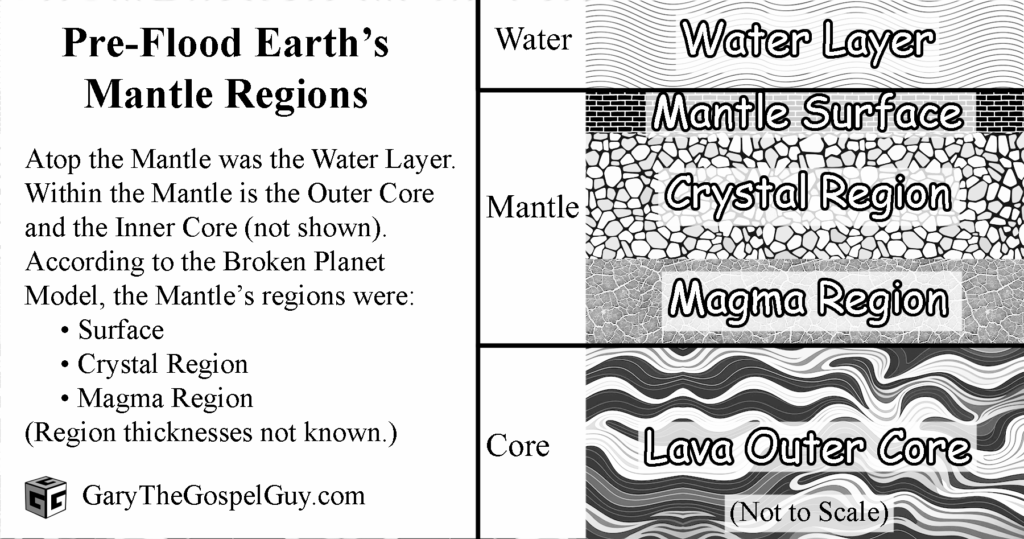
| Key Points: Earth’s Mantle was: A whole, unbroken containment layer.Created on the Third Day—one of only two original rock layers, with the Bedrock Layer.Perfectly smooth and spherical, with no equatorial bulge before the Flood.Approximately 2,600 miles thick, from the rock surface to magma interior.Completely non-porous, ensuring an airtight seal between the Water Layer and the molten contents.Structurally similar to a massive geode, with a hardened shell encasing an insulating, crystal-filled interior, morphing into a magma innermost portion.Designed for stability, not volatility—unlike modern geological theories of Mantle convection, based on a ruptured Mantle.A containment system for Earth’s radioactivity, shielding all surface life from harmful exposure. The key factor in maintaining lifespans of 900+ years by shielding radiation from reaching the surface.Intact for 1,656 years, holding the planet’s structure in perfect balance.Fatally breached during the Flood, leading to a thermohydraulic chain-reaction explosion that fractured the Bedrock and shattered the Pre-Flood world.A masterfully engineered system, maintaining heat, gravity, electromagnetic currents, and radiation—until it was violently devastated, transforming Earth forever. |
The Outer and Inner Core: Earth’s Powerhouse and Heart
Inside the Mantle lay the Outer and Inner Core, the foundation of Earth’s internal energy system. These two layers worked in tandem to regulate the planet’s gravity, heat distribution, and magnetic field generation before the Flood disrupted their balance.
Location & Depth
The Outer Core was located inside the Mantle, surrounding the Inner Core at the Earth’s center. It extended inward from the base of the Mantle to the Inner Core’s surface, with a total thickness of ~1,400 miles (~2,250 km).
Composition: Molten Lava and Metal
The Outer Core consisted of molten iron and nickel, known as “lava”, with traces of sulfur and oxygen possibly present. Unlike the solid Mantle above or the dense Inner Core below, this region was in a constantly moving molten state—a key factor in Earth’s Pre-Flood stability.
Additionally, lava from the Outer Core may have extended up into the Mantle, filling any gaps within the Mantle’s magma and crystalline structure and contributing to the uniformity of Earth’s internal layers.
Function: The Interactive Dynamo Effect
The Outer Core was Earth’s electromagnetic generator, responsible for producing the planet’s protective Magnetic Field. This dynamo effect was a result of:
- Molten metal circulating around the solid Inner Core, much like an electric generator.
- The Coriolis Effect, caused by Earth’s rotation, directing the motion of the molten iron and nickel.
- The interaction between the Outer Core’s molten flow and the Inner Core’s solid mass, generating the electric currents that powered Earth’s Magnetosphere.
Unlike today’s weakened and fluctuating Magnetic Field, the Pre-Flood Earth had a highly stable, powerful magnetic shield, protecting life from cosmic and solar radiation.
Radioactivity: A Contained Nuclear Furnace
The Outer Core was highly radioactive, but all this energy was fully contained by the Mantle above it. The radiation remained locked within, with no exposure to surface life—until the Flood.
When the Mantle was ruptured, molten lava escaped, and radioactive exposure surged throughout the Earth. This radiation release contributed to genetic degradation, mutation rates, and the drastic reduction of human lifespans from over 900 years to no more than 120 years.
The Inner Core: Earth’s Nuclear Engine
Location & Size
At the very center of the Earth lay the Inner Core—a dense, superheated metallic sphere that serves as the gravitational and thermal anchor of the planet. It has a radius of approximately 1,220 km (~758 miles), making up about 19% of Earth’s total radius, at roughly 70% of the Moon’s radius—comparable in size to Pluto.
Composition: A Superheated Metal Sphere
The Inner Core is a solid sphere primarily composed of iron and nickel, with small amounts of sulfur and oxygen possibly present. Unlike the molten Outer Core, the Inner Core remains in a solid state due to the immense pressure exerted by the surrounding layers.
Temperature: The Heat of a Star
The Inner Core’s temperature is estimated to be around 5,700 K (5,430 °C; 9,800 °F)—equivalent to the surface temperature of the Sun. This extreme heat radiated outward, fueling the molten movement in the Outer Core and maintaining Earth’s internal energy cycle.
Function: Gravity, Heat, and Magnetic Stability
The Inner Core played three crucial roles:
1. Gravity Generation – The Inner Core’s immense mass provided a central gravitational pull, stabilizing the layers above.
2. Heat Regulation – Its intense heat sustained the molten state of the Outer Core, preventing planetary cooling.
3. Magnetic Stability – While the Outer Core generated the planet’s magnetic field, the Inner Core stabilized it, ensuring consistent electromagnetic shielding.
The Inner Core and the Post-Flood World
Before the Flood, the Inner Core functioned perfectly, maintaining planetary balance. However, after the catastrophic rupture of the Mantle, the motion of the Outer Core was disrupted, which weakened Earth’s magnetic field, allowing increased radiation exposure and further environmental decline.
Today, the magnetic field continues to degrade, a sign that the Core’s original stability was permanently altered by the Flood’s upheaval.
Conclusion: A Perfect System, Now Broken
The Outer and Inner Core were not chaotic or randomly assembled structures. They were part of a precisely-engineered system, designed to regulate the planet’s energy, gravity, magnetism, and radiation containment.
• The Outer Core was Earth’s electromagnetic powerhouse, generating the Magnetic Field through molten motion.
• The Inner Core was the heat engine and gravitational anchor, stabilizing the planet’s internal forces.
But when the Flood shattered the Mantle, molten lava escaped, radiation surged, and the world was forever altered. The Magnetic Field weakened, gravity may have subtly shifted, and Earth’s shielding was never the same—all factors that contribute to This Broken Planet we live on today.
| Key Points: Earth’s Outer and Inner Core: Outer Core: Earth’s Electromagnetic Dynamo A molten layer surrounding the Inner Core, ~1,400 miles (~2,250 km) thick.Composed of molten iron and nickel, with possible traces of sulfur and oxygen.A constantly moving fluid layer, contributing to planetary stability.The generator of Earth’s powerful Pre-Flood Magnetic Field, through the dynamo effect:Circulating molten metal around the solid Inner Core.Influenced by the Coriolis Effect from Earth’s rotation.Interacting with the Inner Core to generate electric currents.Originally produced a strong and stable magnetic shield, protecting life from cosmic and solar radiation.Contained massive amounts of radiation, fully sealed by the intact Mantle.Contributed to Pre-Flood human lifespans of 900+ years, as radiation was entirely contained.Fatally breached during the Flood, leading to:A release of radioactive material.A dramatic increase in mutation rates and genetic degradation.A reduction in human lifespans to no more than 120 years. Inner Core: Earth’s Central Engine A dense, superheated solid sphere at the center of the Earth.Approximately 758 miles (~1,220 km) in radius, comparable in size to Pluto, about ~70% of the Moon’s radius.Composed primarily of iron and nickel, with possible minor elements like sulfur and oxygen.Superheated to ~5,700 K (5,430 °C; 9,800 °F), equivalent to the Sun’s surface.Performed three crucial stabilizing functions:Gravity Generation – Provided a central gravitational anchor for the planet.Heat Regulation – Sustained the molten state of the Outer Core.Magnetic Stability – Stabilized the electromagnetic field produced by the Outer Core.Before the Flood, it functioned perfectly, maintaining planetary balance.After the Mantle rupture, its stability was compromised, leading to:A weakening Magnetic Field.Radiation exposure.Environmental degradation that continues to this day. |
With the antediluvian Earth’s foundational structure fully explored, we next turn to the Catastrophe itself—the Flood Event that shattered this perfect balance and reshaped the world forever.
Section II Group Discussion Questions
1. What made the Pre-Flood atmosphere perfect for life?
- Higher oxygen and air pressure enhanced health, healing, and longevity
- No extreme weather—just stable, warm, humidity-balanced conditions
- A strong magnetic field protected against radiation and genetic damage
- All of the above
2. How was the Pre-Flood soil different from today’s soil?
- It was rich, deep, and packed with nutrients, never depleted
- It supported vast forests, giant plants, and an abundance of food
- It was part of a unified landmass with no barren deserts or deep salty oceans
- All of the above
3. What role did the Bedrock Layer play in the Pre-Flood world?
- It was a single, unbroken shell supporting the biosphere above
- It acted as a barrier, regulating water movement from below
- It remained stable for 1,656 years before catastrophically breaking
- All of the above
4. What made the Water Layer beneath the Bedrock so unique?
- It was fully contained, forming a global underground reservoir
- It was heated by the Mantle but remained liquid due to perfect conditions
- It was anaerobic, completely sealed from light and surface influences
- All of the above
5. How did the Earth’s Core contribute to Pre-Flood stability?
- The Outer Core generated a powerful, protective magnetic field
- The Inner Core acted as a heat regulator and gravitational anchor
- The Mantle shielded radiation, ensuring long human lifespans
- All of the above
Answers:
1. D. All of the above.
The Pre-Flood atmosphere was a perfect, life-sustaining environment—higher oxygen, stable climate, and radiation protection made 900-year lifespans possible.
2. D. All of the above.
The soil was deep, nutrient-rich, and capable of sustaining immense plant and animal life. It was never depleted and was part of a unified landmass.
3. D. All of the above.
The Bedrock Layer was a structural masterpiece—solid, stable, and completely unbroken until the Flood shattered it.
4. D. All of the above.
The Water Layer was unlike anything we see today—a fully enclosed, pressurized reservoir of fresh water, perfectly balanced within Earth’s structure.
5. D. All of the above.
The Earth’s Core played a crucial role in stability, providing heat regulation, a protective magnetosphere, and structural integrity before the catastrophe.
Reflection:
The Pre-Flood world was not just habitable—it was designed for perfection. Every system, from the atmosphere to the soil, the Bedrock to the Water Layer, was built for human longevity and global flourishing. There was no radiation exposure, no climate disasters, no unstable landmasses—just a seamless, life-sustaining paradise.
The fact that all of this was shattered in an instant is a sobering reality. The Flood wasn’t just a heavy rainstorm—it was the complete destruction of a finely-tuned planetary system. What was once whole is now fragmented. What was once stable is now chaotic. What about the pre-Flood world is most appealing to you?
The next section will explore how and why it all fell apart.